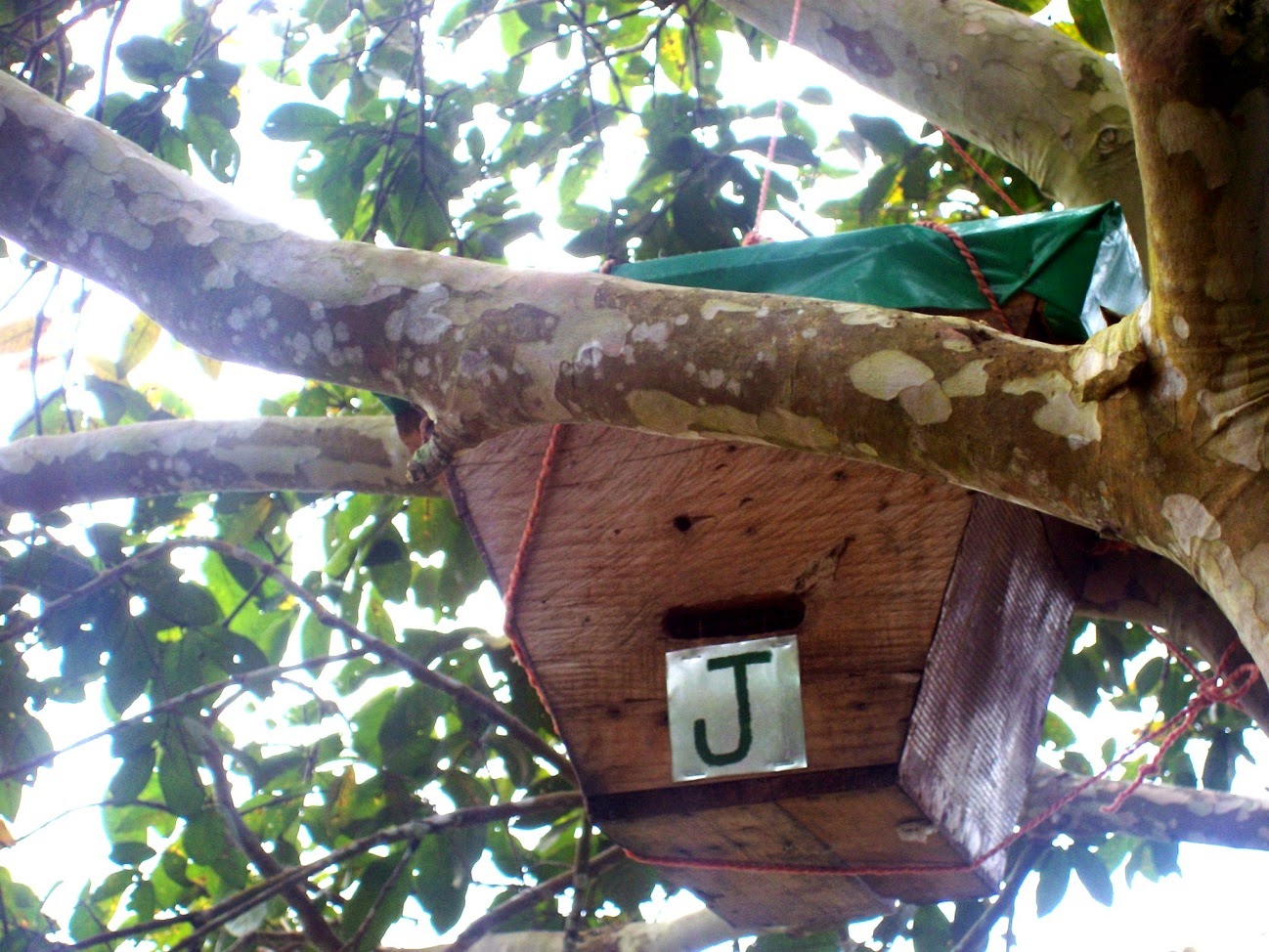
I have a love-hate relationship
with Africanized bees. It’s what I have to work with in Honduras. Sometimes I
just want to get rid of all of them and say that’s enough—no more dealing with
these ornery critters. Other times I actually consider myself lucky that these
are my bees. And then when the honey comes in and the money from the sales
start, it makes all the stings worth the effort.

Beekeeping with Africanized bees is a love-hate
relationship for me. They have a good side and a bad side. It’s been a long
journey of trial and error to learn some of the tricks necessary to work with
these bees.
I’m frequently questioned about
how it is to work with Africanized bees. How defensive are they? How is the honey
production? What do you need to do differently? Are they really killers? What
needs to be done to manage them?
As a beekeeper in Honduras,
I’ve been having this love-hate relationship with Africanized bees for the last
24 years. Some things I have figured out with these bees, but it is still a
continuous learning process.
Honduras as a country generally
experiences this same relationship. When this bee first arrived everyone hated
them. It basically destroyed the honey industry here. Now, some 30 years later,
many Hondurans have come to love the bee, learning ways to manage them and
improve their lives through honey sales.
Africanized bees in Honduras
Beekeeping has a long history
in Honduras. It goes back to the times of the Mayas who managed different types
of native stingless bees common to this area. The bees were usually kept in
hollow tree trunks and the honey would often be fermented and used in their
rituals. Later European colonists arrived, and the European honey bee came
along with them. It wasn’t until the late 1930s that the modern system of
movable frame beekeeping began to appear (although many people continued to
keep colonies in rustic boxes).

The coloring of Africanized bees can vary. Many tend
to be rather dark but some can be a nice orange color. In general they are a
bit smaller than European bees. Their reputation of being very defensive is
well earned. But at the same time they are now earning a reputation for being
good honey producers.
The big change for Honduran
beekeeping came in the early 1980s with the arrival of the Africanized bees
that had slowly been making their way northward from South America. Although it
is a cross between African and European bees, genetically it remains closer to
the African bees, including preserving the defensiveness these bees had
developed.
Most of the backyard beekeepers
got rid of their hives when the bees arrived. Few new beekeepers took their
place. The production of honey declined precipitously. No one wanted to deal
with these ornery creatures.
A common question I receive is
if they are defensive and “killers” like the news and media portray. Most
definitely they can be. There are always articles in the Honduran newspapers
mentioning attacks by Africanized bees—and sometimes they do result in death.
Everybody has a story about chickens or dogs or horses or donkeys being stung
to death. Other times the victim was a person.

There are always newspaper headlines about Africanized
bees attacking people or even deaths due to stinging incidents. Everybody seems
to have a story about chickens or dogs being killed by bees. Africanized bees
can definitely be dangerous.
The most recent fatality was on
June 10 of this year. According to the newspaper articles a 76-year-old man was
stung to death after accidentally bumping into a hive on the property he took
care of. He apparently had poor eyesight and failed to see the box. The fire
department reported that the man was stung at least 500 times. Not so many
years ago the victim was a former Honduran congressman who had a run-in with a
colony on his farm.
Here are some newspaper
headlines about these two incidents and others from the last four years:
“Muere hondureño atacado por
enjambre de abejas”—“Honduran attacked by swarm of bees dies”
“Muere
diputado “Lalo” Sarmiento”—“Congressman “Lalo” Sarmiento dies”
“Abejas
atacan y matan a Eduardo “Lalo” Sarmiento”—“Bees attack and kill Eduardo “Lalo”
Sarmiento”
“Huye
de enjambre de abejas y cae en abismo”—“Escapes from swarm of bees and falls in
abyss”
“Abejas
africanizadas matan a anciano”—“Africanized bees kill elderly man”
“Ataque
de abejas africanizadas en Talanga”—“Africanized bee attack in Talanga”
But can they be managed? Most
definitely. There is now a resurgence in beekeeping, because there are ways to
deal with them and they can produce good amounts of honey. People are realizing
it is a viable alternative to generate income for their families. The number of
new beekeepers is growing as people learn the techniques to manage this bee and
reap the sweet benefits of their efforts.
Beekeeping is always on the
list of projects to promote when development organizations want to improve the
lives of rural farmers or find alternatives for people living in or near
protected forest areas. The national government is always earmarking money to
go towards beekeeping projects. Honey production is increasing yearly. There
are far more headlines in the newspapers about this increase in beekeeping and
honey production than there are for the attacks by these bees.

Africanized beekeeping is now being actively promoted
in Honduras. More and more people are being trained to take advantage of this
activity. Honey prices tend to be high and much more stable when compared with
something like coffee. The number of beekeepers and the amount of honey
harvested is increasing yearly.
Abejas africanizadas—a bane or a boon?
Would I change my Africanized
bees for some pure European bees? I don’t even really want to explore this
question. I have what I have and I really can’t do anything about it. They are
Africanized, and I can’t change that. But for the sake of those who are
curious, here is a list of what I consider some pros and cons with them.
Advantages:
- A good hive will produce honey. If managed well, a lot of it. These bees are adapted to the tropics and work hard. It is often mentioned how they usually get started working much earlier in the day. I always see this when I need to seal up a trap hive full of bees in order to move it to the apiary. I need to do this while it is completely dark. If I over sleep and it is barely starting to become light outside, it’s too late to seal them all inside. They are already coming and going.
- I don’t really have a problem with mites—either because of the Africanized bees’ hygienic nature or because the mite cycle is always broken when they swarm. I don’t feel the need to treat for them. I remember the commercial beekeeper I worked with back in the States. He was always treating with this and that and spending a bunch of money. He had to or otherwise he wouldn’t have the strong colonies or the desired honey production. It was a lot of extra money and a lot of extra time and a lot of extra worries—I’m glad I don’t need to do that.
- They can protect themselves better—especially from the two legged varmints. There is often not a high respect for other people’s property in Honduras, especially if left unattended. The apiary has to be out in the bush so it seems to say to people that it is fair game to enter it and steal honey. Only the most serious persons, however, will enter the hives to steal—everybody else is going to get stung up big time.
- If you want to get free bees, there are always plenty of swarms to catch. They are easy to deal with. Africanized bees tend not to be fussy about their nesting cavity so almost any type of box can potentially work.
Disadvantages
- They are defensive—no ifs, ands, or buts. For any serious bee work you need to armor plate yourself. You are better off overdoing the protection bit and erring on the side of caution.

Full battle gear and lots of smoke. A beekeepers
always needs to be over cautious when working hives of Africanized bees. While
sometimes they may remain calm, there are other times when they can get
downright nasty. The best thing then is to close them up and come back another
day.
- You cannot really do backyard beekeeping any more—unless maybe if you live by yourself out in the boonies. You never know what might set them off and cause a tragedy. Something as simple as the sound of a machete could rile them up. As a result of this….
- The apiaries are more vulnerable to theft. You are almost forced to keep them in an area away from housed and animals. This means that the die-hard thief will have an opportunity to steal the honey if they want. It becomes much harder to keep an eye on the hives and find secure sites.
- If the colony runs out of stores, they will abscond rather than stick around and starve to death. You won’t end up with small colonies at the end of the dearth season, rather empty boxes.
- Africanized bees do like to swarm more—proper and timely management must be taken to curb this.
- Maintaining colonies of European bees would be very difficult. Any queen rearing or natural queen replacement will be affected by the high number of feral colonies in Honduras. It is almost certain that the new queen will mate with Africanized drones, continuing the Africanization. There is also the threat of them being easily robbed out during the dearth period.
I’m going to stop this post
here. There will be more musings, detailing what I have to do in order to take
advantage of these bees. It will consist of some of the ins and outs, the dos
and donts, the cans and cannots of my beekeeping with Africanized bees.
---Tom

Africanized bees deserve their name “killer” but at
the same time they can also be manageable—even for bee beards. We hosted a “Bee
Day” for the fish culture volunteers during my Peace Corps training in
Honduras. We had to show them, and ourselves, that bee beards can actually be
done with Africanized bees.
More newspaper articles:
“Abejas africanas atacan a
estudiantes en Danlí”—“African bees attack students in Danlí”
“Enjambre
de abejas ataca varias personas en un centro turístico”—“Swarm of bees attack
several person at tourist center”
“Bomberos
rescatan a familia de ataques de abejas africanas”—“Firemen rescue family from
attacks of african bees”
“Abejas
africanizadas atacan a habitantes y mascotas de vivienda”—“Africanized bees
attack the habitants and pets of household”
“Abejas
africanas atacaron a tres personas y mataron dos perros”—“African bees attack
tree persons and kill two dogs”
“Cuatro
escolares hospitalizados tras ataque de abejas africanizadas”—“Four school
children hospitalized after Africanized bee attack”
“Brutal
ataque de abejas”—“Brutal bee attack”